Adult Social Work in Digital Media: Supporting People with Disabilities

People with disabilities engage with digital media just as people without disabilities do. A study conducted by Aktion Mensch in Germany provides valuable insights into how inviduals with disabilities use social media and other digital platforms. The study reveals that, in general, most people with disabilities enjoy watching TV and frequently use the internet (Aktion Mensch, page 7).
To understand media usage more precisely, the researchers divided participants into specific groups based on their disabilities. For instance, individuals with hearing impairments showed a strong preference for using the internet. Experts noted that for this particular group, the internet offers broader possibilities for communication (Aktion Mensch, pages 7–8). These findings underline the significant role of the digital world in the lives of people with disabilities.
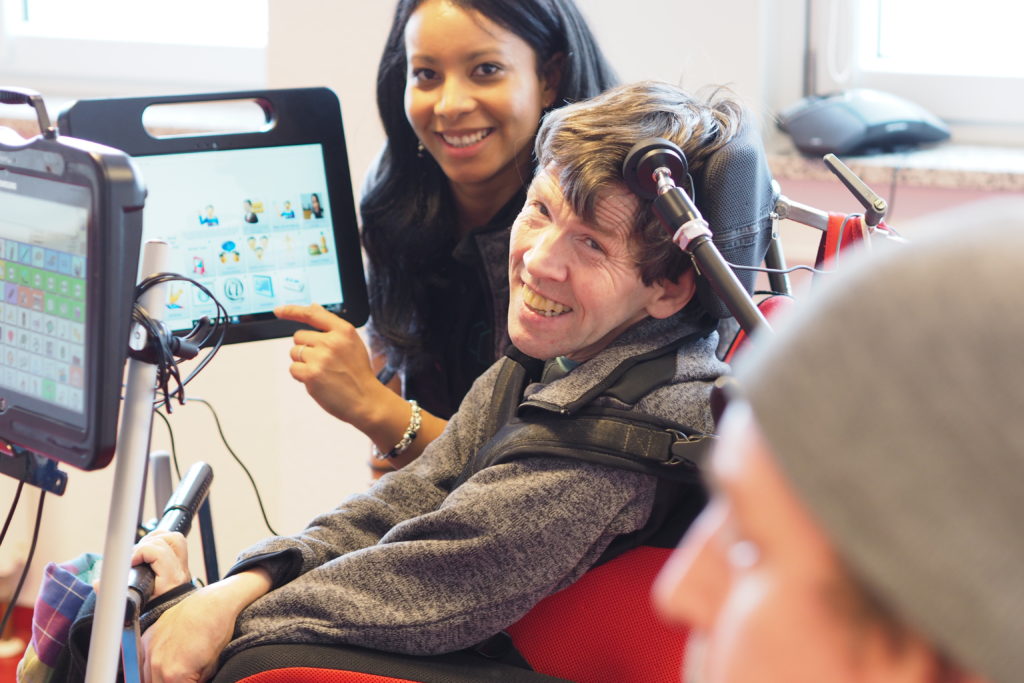
Social workers can play a crucial role in helping people with disabilities navigate and benefit from digital media. By supporting individuals in using the internet and digital devices, social workers can empower them to lead more autonomous lives. One effective method involves conducting professional interviews or polls to gather feedback directly from people with disabilities. Through these polls, participants can share their opinions and experiences, helping social workers understand how to incorporate digital tools into their practice effectively. For example, tablets can be used to facilitate these polls, while digital whiteboards can serve as collaborative tools to create agreed-upon plans for the competent use of digital media in care facilities.
In addition to gathering insights, social workers can introduce clients to various assistive technologies designed to meet specific needs. Ambient Assisted Living (AAL) systems are one such example. (Cartias Germany) These systems, developed by organizations like Caritas Germany, promote independent living for people with disabilities. One notable AAL project is PAUL (Personal Assistant for a Supportive Life), which provides a touch screen interface with various areas to click for assistance. At the center of the system is a large alarm button that connects users to a helper. PAUL can be used both within care facilities and on mobile devices for support outside the home (Technische Universität Kaiserslautern).
Another innovative project is “Projekt KI Kompass Inklusiv,” which aims to equip people with disabilities with the knowledge and skills to use artificial intelligence (AI) effectively in the workplace. This initiative focuses on creating a competence center where individuals can learn how AI can support their integration into the labor market. The goal is to empower people with disabilities to benefit from AI in their future working conditions and enhance their employability. (KI Kompass inklusiv)
Digital media presents exciting opportunities for people with disabilities, offering them new ways to communicate, access support, and improve their quality of life. For social workers, staying informed about these developments and integrating them into their practice is essential to ensure they can provide meaningful support. The ongoing research and advancements in this field are promising, and the future holds immense potential for even more innovative solutions that will further enhance the lives of people with disabilities.
References:
https://www.aktion-mensch.de/inklusion/barrierefreiheit/studie-digitale-teilhabe
https://www.youtube.com/watch?v=oXY8UaGbZnI&t=111s
https://www.eit.uni-kl.de/db-litz/assisted_living/website/paul.html
https://ki-kompass-inklusiv.de/ueber-ki-kompass-inklusiv/


This blog highlights how digital media and assistive technology empower people with disabilities. It effectively showcases research, projects like PAUL and KI Kompass Inklusiv, and the role of social workers in digital inclusion. A well-structured and insightful read!!!!
ReplyDeleteI like how social workers help people with disabilities use technology. Tools like PAUL and AI training make life easier and help people be more independent. Different people need different tech help, and it's great that social workers are learning about new ways to support them.
ReplyDeleteI love how this article highlights the role of social workers in digital inclusion. Teaching digital skills and promoting accessibility is crucial!
ReplyDeleteGreat summary! You highlighted how digital media and social workers can empower people with disabilities, using technology to promote independence and inclusion.
ReplyDeleteThis is such an important topic to be discussed about! Great job summarizing this topic in this post.
ReplyDelete